Espresso Machines With Built-In Coffee Grinders
Best Sellers
FAQs
Semi-automatic models typically grind coffee into a portafilter, leaving you to handle steps such as tamping and starting the shot. Some automate additional steps. Superautomatic machines grind, dose, tamp, and brew internally, usually at the touch of a button. Choose based on how hands-on you want your espresso preparation to be.
Use whole coffee beans that meet your machine manufacturer’s recommendations. Medium-roast beans with a dry surface are a common starting point, especially for superautomatic machines. Very oily or flavored beans can leave residue in the grinder, and some manufacturers advise against them. Check your manual before filling the hopper.
Follow your machine’s maintenance schedule for both the brewing system and grinder. Routine tasks typically include emptying spent grounds, washing the drip tray, and cleaning milk-contact parts after use. Remove coffee residue from the hopper and accessible grinder components as directed. Only rinse removable parts that the manufacturer identifies as washable.
Yes, but the process depends on the machine. Some models have a bypass chute for preground coffee, which lets you prepare decaf without changing the beans in the hopper. Others require changing the whole beans. Grounds may remain inside the grinder between uses, so switching beans does not immediately remove all traces of the previous coffee.
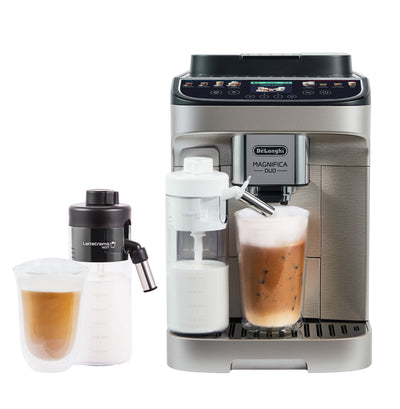
Many include milk frothing, but the controls vary. A manual steam wand lets you steam and texture milk yourself, while an automatic milk system handles more of the process through programmed settings. Some machines offer assisted steaming as a middle ground. Check whether the machine uses a steam wand, milk container, or pickup tube.